When a cold drink stings – tooth sensitivity and brushing damage
Nov 10, 2026

Do you get a sudden pain in your teeth when you drink something cold, eat ice cream or brush your teeth? Tooth sensitivity can have many causes, but one of the most common is exposed tooth necks, which often develop from brushing too hard.
What is tooth sensitivity?
One of the most common complaints patients bring to the dentist is sensitive teeth, where cold causes pain. Other things can cause the same sensitivity, such as touch, for example from a toothbrush.
Sensitivity can have various causes and the symptoms vary, from a quick twinge that disappears very fast to a pain that lingers in the tooth for a while after the cold.
When cold or something else causes a sudden, sharp pain, it is often due to wear or brushing damage, where nerve fibres near the surface of the tooth are triggered.
When the pain lingers in the tooth for some time, nerve fibres deeper inside the tooth have been stimulated. This can be caused by decay, a broken or leaking filling, or a crack in the tooth.
Temporary sensitivity can follow tooth whitening, a recent filling, an extraction or surgery, or a cleaning and gum treatment. If sensitivity after treatment lasts more than a few weeks or is very bothersome, it is best to see the dentist who did the treatment.
If heat causes pain, it may be a sign that the damage to the tooth is more serious and that the nerve has become inflamed.
Always see a dentist if you have pain that lingers in the tooth for more than a moment.
What is brushing damage and why does it cause sensitivity?
Brushing damage is wear or damage to the teeth and gums caused by brushing too hard or in the wrong way over a long period. Heavy pressure, repeated back-and-forth scrubbing and abrasive toothpaste can all contribute.
The wear often shows as a dip or groove at the neck of the tooth, along the gum line. Often the gum has receded and the root surface is exposed. Exposed root surfaces are softer and more easily worn by brushing than the crown, which is covered in enamel. When the root surface is exposed and opened up by brushing, it often becomes very sensitive, because the cold reaches nerve endings in tiny channels that run from the surface to the nerve inside the tooth.
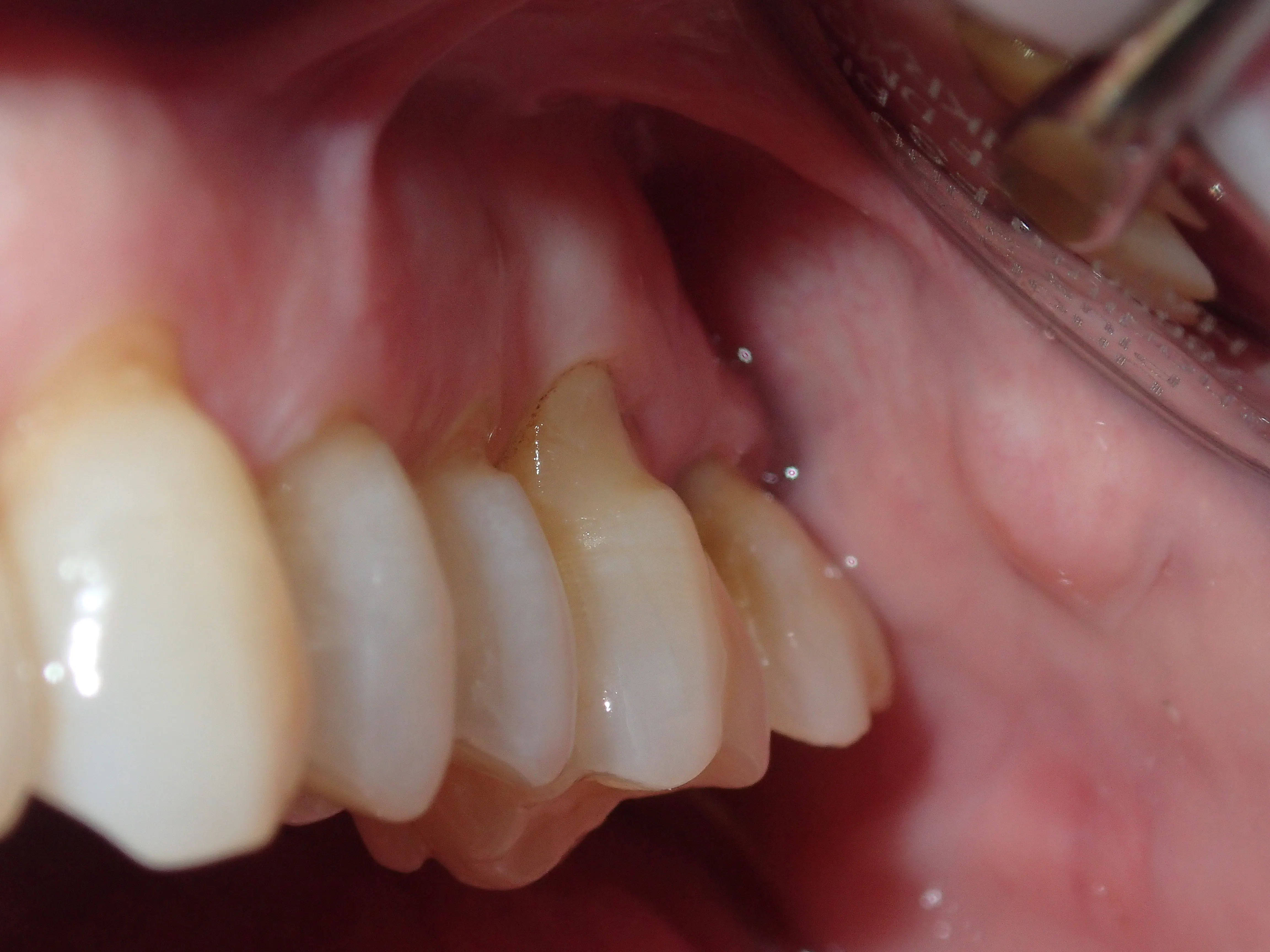
Dips near the gum line can also form in other ways, and other things besides brushing can play a part. Acids from food, drinks and the stomach can dissolve the surface of the tooth and make it wear more easily. Decay at the neck of the tooth (root decay) can create a dip, and heavy biting forces have also been shown to make small pieces of tooth break away at the neck, leaving a dip or notch.
What can you do to prevent brushing damage and sensitivity?
- Always use a soft toothbrush and change it regularly
- Use light pressure when brushing. Holding the brush like a pen can help if you tend to brush too hard
- Use small circular movements rather than big back-and-forth strokes
- An electric toothbrush with a pressure sensor can help if you brush hard
- Use a toothpaste for sensitive teeth and avoid abrasive toothpastes
- Avoid making the sensitivity worse by exposing your teeth to too much cold
- See a dentist if the sensitivity doesn't go away
What can your dentist do to reduce sensitivity at the neck of the tooth?
Your dentist will always start by trying to find the cause of the sensitivity, by carefully examining the area and in some cases taking X-rays.
If no other cause is found and the sensitivity seems to come from exposed tooth necks, the right steps can be taken.
- Your dentist gives advice on changing habits, for example brushing technique and choice of toothpaste.
- Usually the first step is to apply a desensitising treatment to the area, which seals the open channels in the tooth and stops the cold reaching the nerve endings.
- If that isn't enough, a filling can be placed to cover the damage at the neck of the tooth and stop it getting deeper with continued brushing.
- Fillings at the neck of the tooth are also often done to improve the look of the tooth and strengthen it.
- In some cases where the gum has receded, a procedure can be done to move it back.
If you suffer from sensitive teeth, it's always best to see a dentist who can assess the cause, extent and symptoms. Treatment may involve changing habits, a desensitising treatment or a filling. Don't hesitate to get in touch – treatment is often simpler than you think.


