Nicotine Pouches – Are They Really That Bad?
Jun 1, 2025
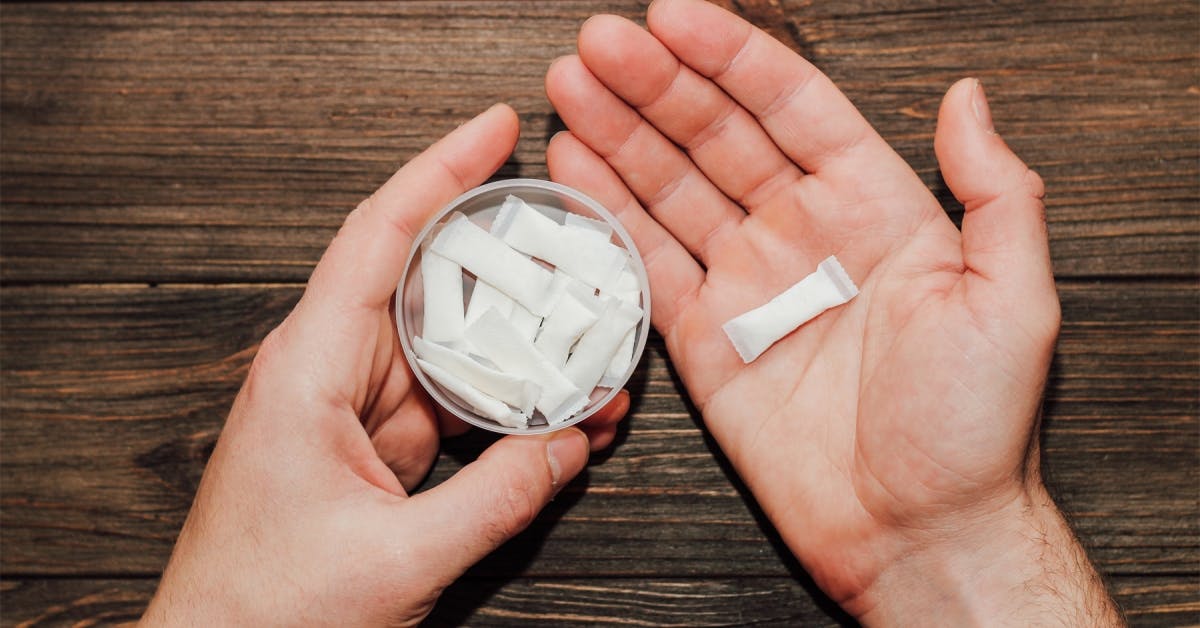
You feel the urge, take out the small pouch, and place it under your lip. Nicotine quickly enters your bloodstream. You experience a calming sensation as the addiction is satisfied, but a series of reactions begin in your body, most of which are far from calming.
But what is in these nicotine pouches?
- Many say nicotine pouches are tobacco-free. This is somewhat misleading since the nicotine in the pouches is extracted from tobacco leaves.
- In addition, the pouches contain binders, thickeners, salt, baking soda, flavorings, and sweeteners.
- Baking soda raises the pH level, which helps nicotine enter the bloodstream faster through the mucous membranes. This makes the pouches especially addictive.
- Some pouches also contain substances that make them more irritating to the mucous membrane, such as lime.
What do nicotine pouches do to your body and what effects do they have on dental and oral health?
Nicotine pouches have been on the market for about 10 years and are relatively new historically. Many studies are ongoing regarding their long-term effects on general health and oral health. Use of nicotine pouches has increased significantly in Iceland, especially among teenagers and young adults. It is now estimated that about one-third of Icelandic youth use nicotine pouches, most daily. There is particular concern about girls increasingly becoming addicted, which raises the risk of pregnancy-related problems linked to nicotine use.
Effects of nicotine pouches in the mouth:
- Sores on the mucous membrane where the pouches rest. Sores caused by nicotine pouches are much worse than those caused by smokeless tobacco. Smokeless tobacco causes thickening of the mucous membrane, often whitish with folds that can resemble elephant skin. This reverses when tobacco use stops. However, sores from pouches are reddish due to their corrosive effects and can take much longer to heal. In Sweden, research is ongoing on sores caused by pouches that take up to a year to heal and cause significant pain.
- Gum recession at the root surfaces. The corrosive effect of the pouches damages the gums around the teeth, causing gum loss along the root. This can cause tooth sensitivity and increase the risk of damage. The cosmetic impact can also be significant.
- Increased acidity in the mouth can lead to tartar formation where it would not normally develop, for example, near the upper front teeth under the gum line. This tartar can be very harmful to the tooth-supporting structures.
The general health effects of nicotine pouches are considerable since nicotine enters the bloodstream and circulates throughout the body.
- Effects on brain function. People who start using nicotine pouches are at high risk of developing lifelong addiction. Studies show nicotine addiction can increase the risk of other substance addictions. Furthermore, research indicates nicotine negatively affects cognitive functions such as memory, attention, concentration, learning, and impulse control, and may increase the risk of mental illnesses.
- Increased risk of cardiovascular disease. Blood vessels stiffen, increasing the risk of stroke and heart attack.
- Increased cancer risk, primarily esophageal and pancreatic cancers.
- Diabetes. Nicotine affects the body’s ability to regulate blood sugar and may increase the risk of type 2 diabetes.
If you are not ready to quit using nicotine pouches but want to minimize effects on oral health, keep these tips in mind:
- Don’t always place the pouch in the same spot in your mouth.
- Keep the pouch in your mouth for as short a time as possible.
- Choose pouches with the lowest nicotine content or nicotine-free ones if you are trying to quit.
- Make sure the pouch does not rest directly on the gums near the teeth; it should be at least 3 millimeters away from the gum-tooth junction.
- Maintain good oral hygiene: brush teeth carefully twice daily with a soft toothbrush and floss daily.
- Visit your dentist regularly for mucous membrane check-ups.
- Pay attention to your mucous membrane and examine it regularly. If you get sores that never heal, see your dentist.
Want to quit using nicotine pouches?
Nicotine pouches stimulate the brain’s reward system and are highly addictive because nicotine enters the bloodstream so quickly. It can be difficult to stop using them even with strong willpower.
Here are some tips for those who want to quit:
- Follow a plan and systematically reduce nicotine intake. Use pouches with less nicotine and use them less frequently and for shorter times.
- Nicotine-free pouches can be a helpful tool to overcome nicotine addiction.
- What triggers your nicotine cravings? Think about which situations are likely to be difficult and make a plan for how to handle them.
- Tell others you are quitting — it will motivate you.
- Use the money you save to buy something you want.
- Enjoy how much better you look without a pouch under your lip.
Nicotine withdrawal symptoms are worst in the first 2–4 days. During this time, you may feel anxiety, difficulty concentrating, fatigue, and even sleep problems. Withdrawal symptoms generally last 2–4 weeks, and then you just have to avoid starting again!
Few people who start using nicotine pouches realize what they are getting into. Addiction develops quickly, especially in young people with immature brains, and then it also becomes stronger. Therefore, the best advice is:
Never start using nicotine pouches or other nicotine products!